


Choosing a first school feels simple until you start comparing options. Two preschools can sit a few streets apart and still offer very different days for a three-year-old. One may revolve around a teacher-led timetable, while the other places the child at the centre of the room. Knowing what separates them helps you decide based on how your child actually learns, not on a brochure. Here are nine practical ways a Montessori classroom differs from a conventional preschool, explained plainly so you can judge what suits your family.
1. Philosophy and Learning Approach
A regular preschool usually follows a curriculum built around a fixed plan. The teacher decides the topic of the day, and children move through it together. Montessori starts from a different belief: young children are naturally eager to learn and do their best work when given freedom within clear limits. If you are searching for a pure montessori school in bangalore, look for classrooms where this belief shapes every routine rather than being added as a label on top of a conventional programme.
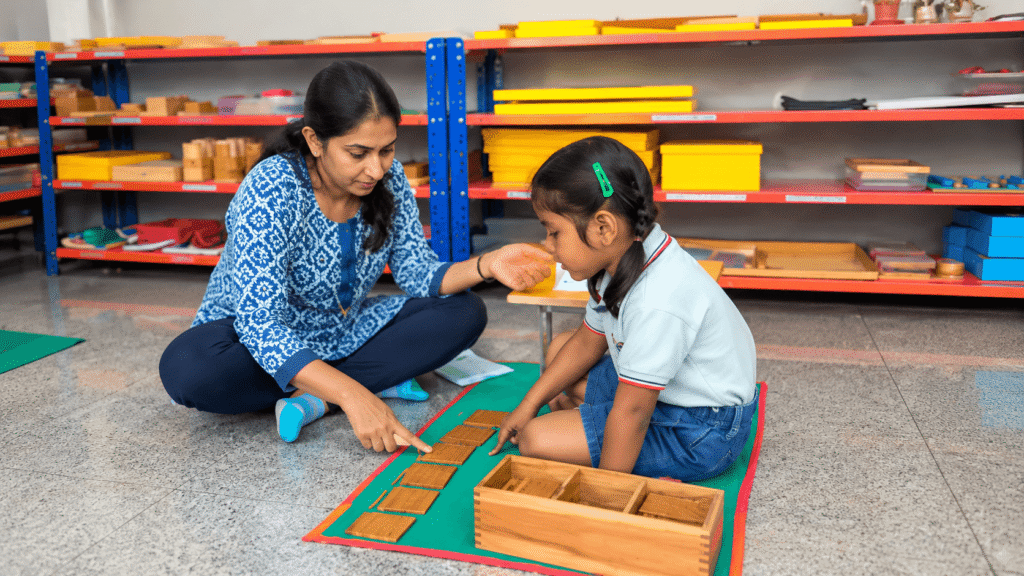
The word “pure” matters here. It signals that the method is followed as Maria Montessori designed it, including its materials, its structure and its respect for the child’s pace, instead of borrowing a few activities and blending them into a traditional format.
2. The Role of the Teacher
In a regular preschool, the teacher is the main source of knowledge. She stands at the front, explains, demonstrates and expects the group to follow along. The pace of the lesson depends on what she has planned for that day.
A Montessori teacher, often called a guide, takes a quieter role. She observes each child, introduces materials one-on-one, and steps back once the child begins working independently. Her skill lies in noticing when to help and when to let a child struggle productively, because that struggle is where real confidence begins to grow.
3. The Classroom Environment
Walk into a conventional preschool and you will often see rows of small tables, a board at the front, and a corner crowded with toys. Furniture is arranged for group instruction, and the walls are usually decorated by adults.
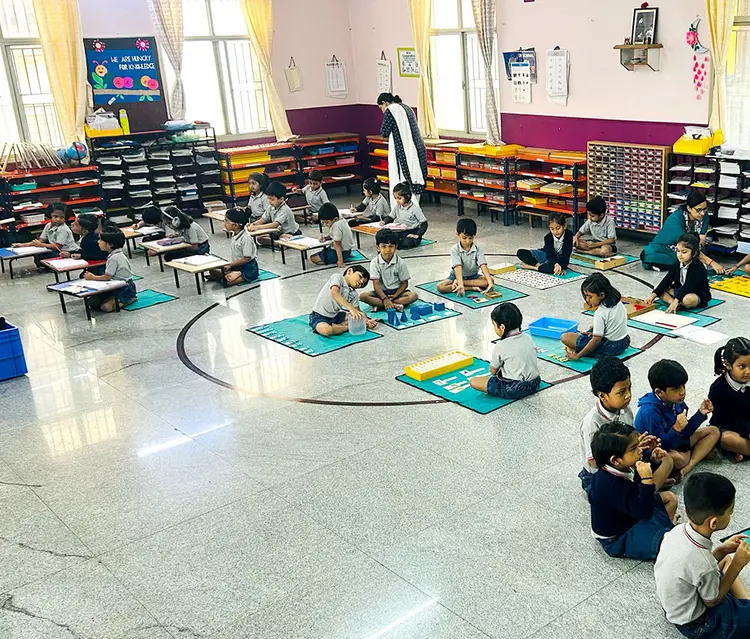
A Montessori room feels calmer and more purposeful. Low open shelves hold neatly arranged materials, child-sized furniture invites independence, and every item has its place. Children can reach what they need without asking for permission, which quietly teaches responsibility and order. The space feels less like a stage and more like a small, well-organised workshop where children are trusted to work.
4. Learning Materials
Regular preschools rely heavily on worksheets, flashcards, storybooks and plastic toys. These tools have their uses, but many are designed for entertainment or repetition rather than discovery.
Montessori materials are specially designed, hands-on and self-correcting. A child working with graded cylinders, bead chains or sandpaper letters can see for themselves when something is wrong, without an adult pointing it out. Each material isolates a single concept, so abstract ideas like quantity, size or sound become concrete before they are ever written down. This builds understanding that lasts, rather than facts that are simply memorised.
5. Assessment and Progress
Regular preschools often track progress through tests, worksheets, grades or stars. Even at a young age, children may begin to link learning with approval or comparison to others.
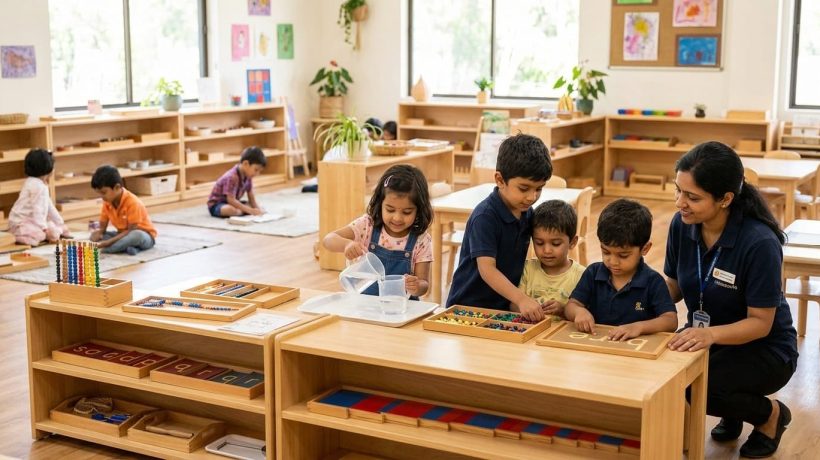
Montessori relies on careful observation and detailed records instead. Guides note which materials a child has mastered, what holds their interest, and where gentle support is needed. Progress is measured against the child’s own development, not against classmates. Parents usually receive a fuller picture of their child’s character, habits and skills, which tells them far more than a number or a sticker on a page.
6. Pace and Freedom of Choice
In a traditional preschool, everyone usually does the same activity at the same time. Faster learners may feel bored and slower ones may feel rushed, since the schedule moves forward regardless of who is ready.
Montessori lets children choose their work from a prepared selection and stay with it as long as they need. This uninterrupted work period builds concentration, one of the most valuable early skills. The freedom is not unlimited, though. Choices come from options the guide has thought through, so children practise decision-making inside a structure that keeps them safe and focused.
7. Discipline and Social Development
In many conventional settings, discipline depends on rewards, timeouts and the authority of the teacher. Children behave because an adult is watching or because a prize is promised.
Montessori encourages self-discipline that comes from within. Ground rules are simple and consistent, and children learn to resolve conflicts through conversation, with guidance rather than punishment. Because they care for their classroom, push in their chairs and wait their turn with shared materials, courtesy becomes a daily habit. Social skills grow through real interactions rather than scripted lessons about manners.
8. Preparation for Life and Future Schooling
A regular preschool often aims to prepare children for primary school by introducing letters, numbers and routines early. That has real value, but it can put too much weight on readiness for the next classroom.
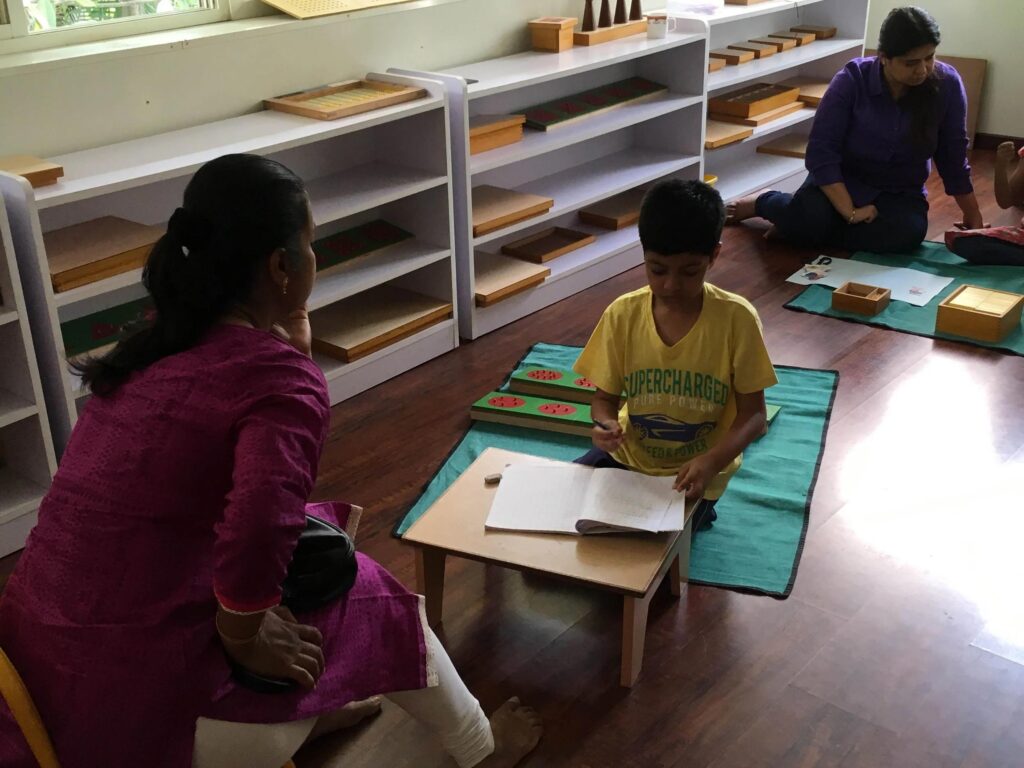
Montessori looks further ahead, towards independence, confidence and a lasting love of learning. Children learn to dress themselves, tidy up after their work and plan their own activities. These habits help them settle into any later school with curiosity, resilience and a steady attitude to effort. Academic skills are still built carefully, but they rest on strong character instead of replacing it.
Final Thoughts
Neither approach is automatically right for every family. A regular preschool offers structure and familiarity, while Montessori offers independence, hands-on discovery and respect for each child’s pace. The best way to decide is to visit classrooms, watch how children spend their time, and notice whether they look engaged, calm and curious. Ask how the teachers guide, how progress is recorded and how daily routines are organised. When what you see matches what you hope your child will become, you have likely found the right place to begin.